

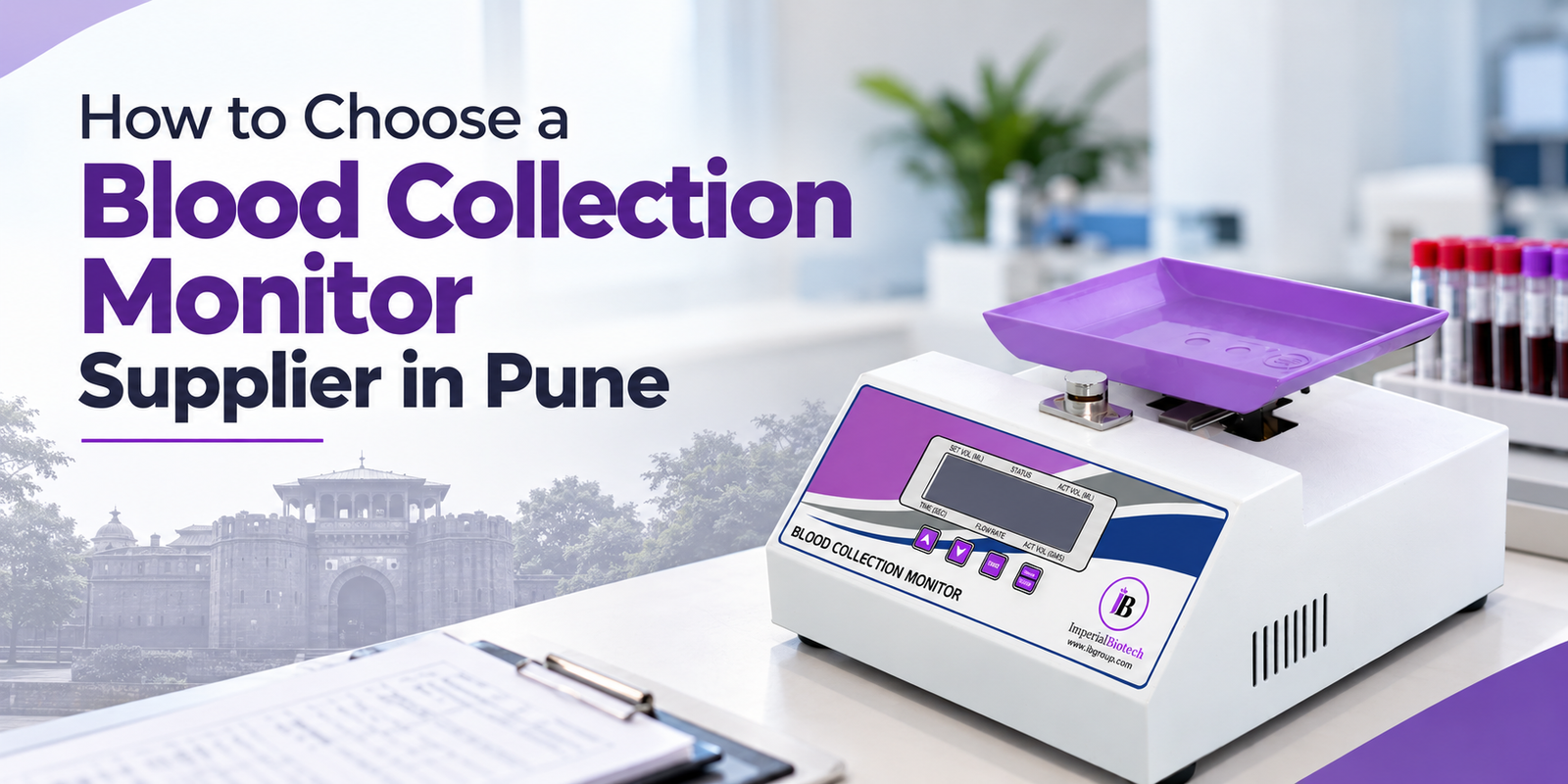
How to Choose a Blood Collection Monitor Supplier in Pune
Choosing the right blood collection monitor supplier in Pune is an important decision for blood banks, hospitals and blood collection centres. The equipment used during blood donation procedures should suit the facility’s operational needs, staff workflow and blood collection requirements.
A suitable supplier should provide clear product information, relevant technical specifications and assistance in understanding the equipment before purchase. Rather than comparing suppliers on price alone, healthcare facilities should evaluate product suitability, usability, service support and long-term requirements.
What Is a Blood Collection Monitor?
A blood collection monitor is a device used during blood donation procedures to monitor the blood collection process. Depending on the model, it may provide functions that help staff observe collection progress and manage the procedure according to the equipment’s operating instructions.
These devices are used in blood banks, hospitals and blood collection centres where routine blood donation activities take place. Features can vary between models, so buyers should review the manufacturer’s specifications before selecting a device.
1. Understand Your Blood Collection Requirements
Before contacting a blood collection monitor supplier in Pune, identify how the equipment will be used in your facility.
Consider the following questions:
-
How frequently does your facility conduct blood collection procedures?
-
How many collection stations need equipment?
-
What operating features do your staff require?
-
Does the equipment need to fit into an existing collection setup?
-
Are there specific operating or documentation requirements at your facility?
Having clear answers helps you compare suitable models and avoid purchasing equipment with unnecessary features or inadequate functionality.
2. Check the Technical Specifications
Technical specifications are among the most important factors when evaluating a blood collection monitor. Different models may offer different operating features, controls and configurations.
Before making a purchase, review:
-
Blood collection monitoring functions
-
Display and control arrangement
-
Power supply requirements
-
Operating instructions and handling requirements
-
Available alarms or alerts, where applicable
-
Equipment dimensions and installation requirements
-
Warranty terms and supplied accessories
Do not assume that every blood collection monitor includes the same functions. Confirm each feature in the documentation for the specific model you are considering.
3. Evaluate Ease of Use
Blood collection equipment should be practical for the staff who operate it. A complicated interface or unclear operating instructions can make routine procedures more difficult.
When comparing models, consider whether the controls are easy to understand, the display is readable and the operating instructions are clear. Staff should receive appropriate training and follow the manufacturer’s instructions when using the equipment.
Where possible, ask the supplier for a product demonstration or additional information about the operating process before making a decision.
4. Ask About Product Quality and Documentation
Healthcare facilities should review the documentation supplied with the equipment instead of relying only on promotional descriptions.
Ask the supplier about the manufacturer’s details, technical specifications, user manual, warranty documentation and any applicable quality or regulatory documents. Verify that the documentation relates to the exact model being purchased.
The equipment should be suitable for its intended application and comply with the requirements applicable to your facility. If particular standards or certifications are necessary, verify them directly from the relevant documents.
5. Compare Warranty and After-Sales Support
The purchase price is only one part of the overall cost of equipment. Warranty coverage, maintenance requirements, spare parts and technical assistance may also affect the long-term value of a purchase.
Before choosing a supplier, clarify:
-
What does the warranty cover?
-
How long is the warranty valid?
-
Is technical assistance available if an issue occurs?
-
Are replacement parts available for the selected model?
-
What maintenance does the equipment require?
-
What is the process for reporting a fault?
Ask for the applicable terms in writing. Clear information about support can help your facility plan equipment use and maintenance more effectively.
6. Compare Suppliers Beyond Price
When searching for a blood collection monitor supplier in Pune, compare suppliers using the same criteria. A lower quotation may not represent the best option if product specifications, warranty terms or documentation differ.
|
Evaluation factor |
What to check |
|---|---|
|
Product suitability |
Whether the model meets your requirements |
|
Technical details |
Specifications and operating functions |
|
Documentation |
User manual and applicable certificates |
|
Warranty |
Coverage, duration and conditions |
|
Support |
Technical assistance and maintenance arrangements |
|
Commercial terms |
Price, taxes, delivery and payment conditions |
Request quotations for comparable models wherever possible. This makes it easier to assess the total offering rather than comparing prices without considering the differences between products.
7. Confirm Delivery and Supply Arrangements in Pune
Before placing an order, confirm whether the supplier can deliver to your facility in Pune and establish the expected delivery timeline.
Ask about transportation arrangements, packaging, installation or setup requirements, if applicable, and the documents provided with the equipment. If your facility has a procurement schedule, communicate the expected delivery date before confirming the order.
Do not assume that a supplier has a local office or warehouse in Pune simply because it serves customers in the city. Confirm the actual supply arrangements directly with the supplier.
8. Questions to Ask Before Finalising a Supplier
Before making your final decision, prepare a short checklist of questions for each supplier:
-
Which blood collection monitor models are available?
-
Can you provide the technical specifications and user manual?
-
What warranty and after-sales support are included?
-
Are the required accessories supplied with the equipment?
-
What are the delivery timeline and commercial terms for Pune?
-
Can you provide documentation for the specific model?
-
Are product demonstrations or operating guidance available?
Comparing the answers will help your purchasing team make a more informed decision.
Conclusion
Choosing a blood collection monitor supplier in Pune involves more than finding an available product at a suitable price. Healthcare facilities should consider technical specifications, ease of operation, documentation, warranty, after-sales support and delivery arrangements.
A clear understanding of your facility’s requirements will help you shortlist suitable equipment and compare suppliers fairly. Before placing an order, verify the product details and confirm all commercial and support terms in writing.
Explore Blood Collection Monitor Options from IBPL Group
IBPL Group supplies blood collection monitors for hospitals, blood banks and blood collection centres. If you are evaluating equipment for your facility, you can review the available product information and contact the team to enquire about specifications, pricing and supply availability for Pune.
Explore the Blood Collection Monitor product page or visit the Contact Us page for further information.